What is Ankylosing Spondylitis?
Ankylosing spondylitis (AS) is a long-term inflammatory arthritis that mainly affects the spine and the sacroiliac joints where the spine meets the pelvis. It typically starts between the ages of 15 and 35 and is about three times commoner in men.
Unlike ordinary mechanical back pain, the pain of AS is caused by inflammation. Over years, the inflamed ligaments turn to bone and the vertebrae can fuse together (“ankylosis”), producing a stiff, forward-bent spine — the “bamboo spine” seen on X-ray.
AS is under-diagnosed in India: the average delay from first symptoms to diagnosis is several years, because young men with back pain are rarely investigated. Recognising the pattern early is the key.

Symptoms: the Inflammatory Pattern
Suspect AS when back pain in a young person has these features:
- Started gradually before the age of 40 and has lasted more than 3 months
- Worse in the second half of the night and on waking; improves with exercise, not rest
- Morning stiffness of the lower back lasting more than 30 minutes
- Pain in the buttocks, often alternating from one side to the other
- Pain and swelling in other joints (hip, knee, heel) or a painful red eye (uveitis)
- Gradual loss of flexibility; in late disease a stooped posture and reduced chest expansion
Causes & Diagnosis
The exact cause is unknown, but genetics play a large part: around 90% of patients carry the HLA-B27 gene, and the condition runs in families. Having the gene does not mean you will get AS — most carriers never do.
Diagnosis combines the clinical pattern with blood tests (HLA-B27, ESR/CRP for inflammation) and imaging. X-rays show sacroiliac changes only after years; an MRI of the sacroiliac joints can show inflammation much earlier and is the test of choice when AS is suspected.
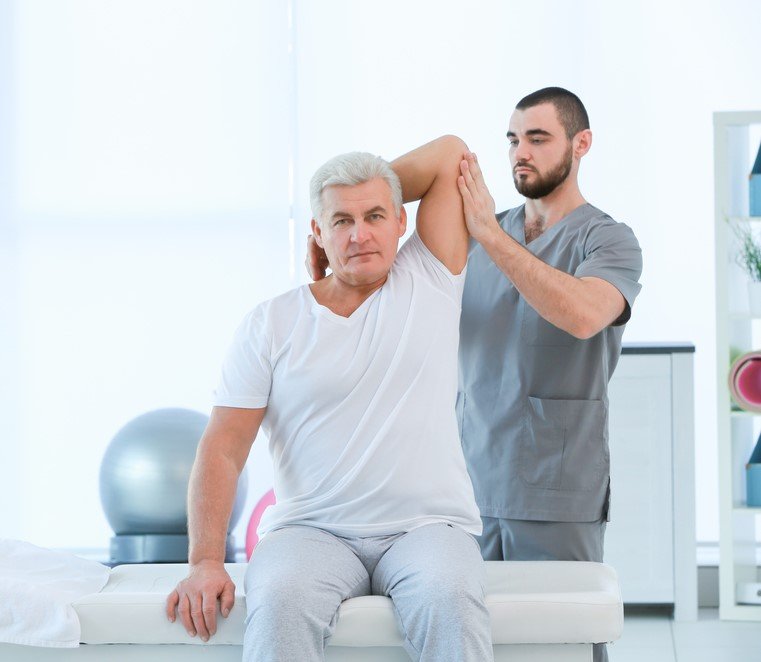
Treatment
Medical Treatment & Exercise
There is no cure, but modern treatment controls symptoms and slows fusion very effectively:
- Daily exercise and stretching — the single most important treatment; swimming is ideal
- NSAIDs (anti-inflammatory painkillers) as first-line medication
- Biologic drugs (anti-TNF, anti-IL-17) for patients who do not respond, usually managed together with a rheumatologist
- Posture training, sleeping on a firm mattress with a thin pillow
- Stopping smoking, which clearly worsens the disease
- Regular eye checks; urgent review for any red, painful eye
Role of the Spine Surgeon
Surgery is needed in a minority of patients, but when it is needed it is specialised work:
- Fractures — a fused AS spine is brittle and can break with minor falls; these fractures are unstable and usually need fixation. Any new neck or back pain after a fall in an AS patient is an emergency until proven otherwise.
- Deformity correction — osteotomy to straighten a severely stooped spine so the patient can look forward again (see kyphosis)
- Hip replacement when the hips are destroyed by the disease